
A before and after photo of nails, lashes or a haircut is your best shop window. But to post it on Instagram, your website or anywhere else you need your client's express consent. You must also be able to prove it. Letting you take the photo does not mean letting you publish it.
Here is what the law says, how to ask for consent and a real case with a fine. If you want to keep each client's photos on her booking, with her consent, see Bookings for nails, lashes, brows and hair.
Why you need her consent
Two laws protect your client's photo. Both ask for her consent:
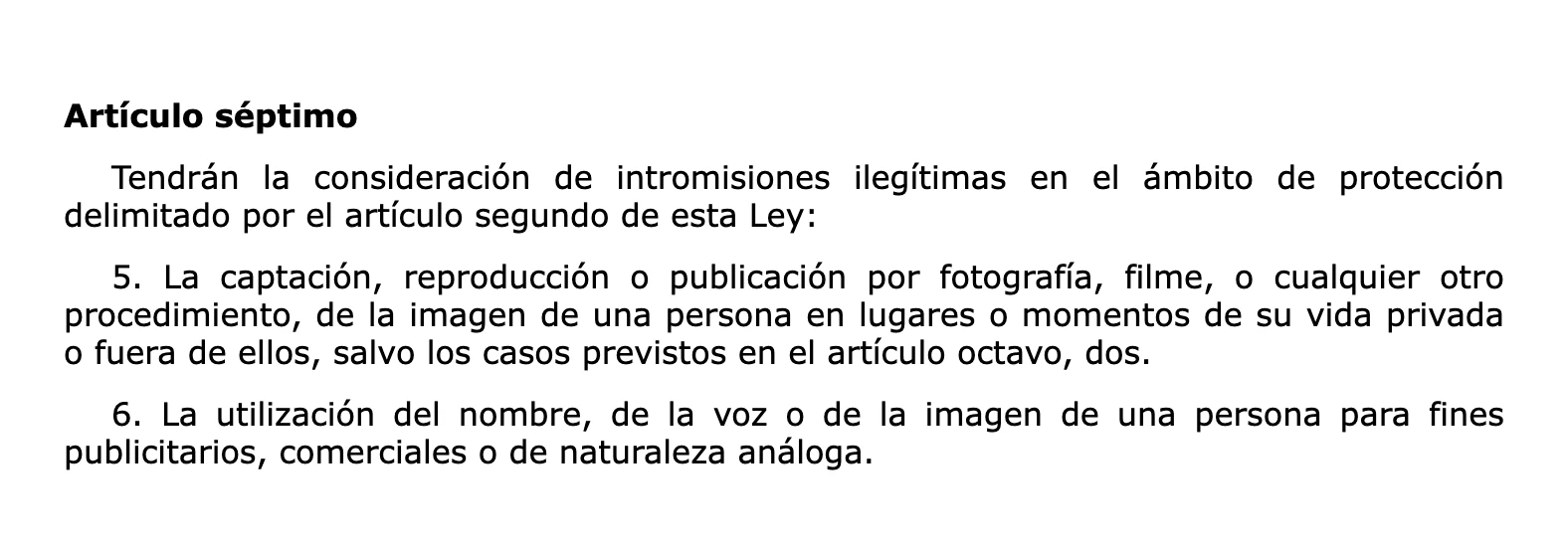
- The right to one's own image. Using a person's image for advertising or commercial purposes is an unlawful intrusion (article 7.6 of Ley Orgánica 1/1982), unless that person has given express consent (article 2.2).
- Data protection. A photo in which someone can be identified is personal data (article 4.1 of the General Data Protection Regulation). To publish it you need a legal basis. For photos on social networks that basis is, as a rule, consent (article 6.1.a).
What is more, if anyone ever asks, it is you who has to prove that your client gave her consent (article 7.1 of the GDPR).
What if only the hands show?
A photo is personal data when it lets someone identify the person, even without showing her face. The law counts physical features (article 4.1 of the GDPR) and any reasonable means of identifying her (recital 26). Hands with a tattoo, a recognizable ring, a tag with her account or her name in the caption identify her.
A photo of nails with no detail that leads to her, no tag and no name, carries much less risk. Even so, asking for consent is the simplest course and the one that builds the most trust.
How to ask for consent
- Ask separately from the service. Agreeing to the manicure is not agreeing to the photo on Instagram. Ask about it as a separate thing.
- Say what for. Which photos, where you will publish them (your Instagram, your website) and whether her face will show or only the work.
- Keep it in writing. A message where the client answers yes, a signed form or a box she ticks herself. What matters is that you can show it.
- Let her change her mind. She can withdraw consent at any time. Withdrawing must be as easy as giving it (article 7.3 of the GDPR). What you published before with her consent does not become unlawful, but from that moment you stop using the photo.
If the client is a minor
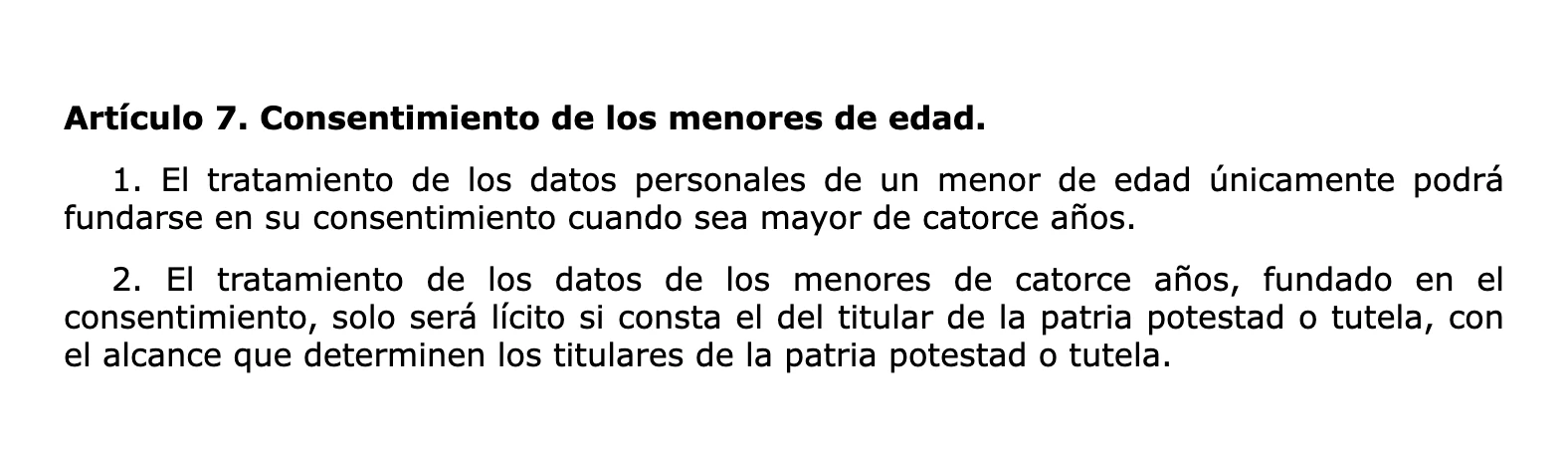
With a minor, two laws apply together. For their data, someone aged 14 or over gives consent themselves. Under 14, consent comes from whoever has parental authority or guardianship (article 7 of Ley Orgánica 3/2018).
For their image, the minor consents if they are mature enough. If not, their legal representative gives consent in writing and has to tell the public prosecutor (Ministerio Fiscal) first. If the prosecutor objects within eight days, a judge decides (article 3 of Ley Orgánica 1/1982).
The simplest course is not to post photos of minors.
A real case: a €10.000 fine
In proceeding PS-00130-2024, the Spanish Data Protection Agency (AEPD) fined a cosmetic surgery clinic that had posted a patient's before and after photos on Facebook and Instagram without her consent to publish them. The fine was €5.000 for processing the data without a legal basis and another €5.000 because it was health data. A beauty treatment involves no health data, but the lesson is the same: consent to take the photo is not consent to publish it.
With Bookings you keep before and after photos on each booking, with the client's consent.