If you regularly go to clients' homes to do nails, lashes, brows or a haircut, you are an autónoma, self-employed: a regular, personal and direct economic activity on your own account (article 1.1 of Ley 20/2007). Working without premises does not change that. What changes some details is the activity code, the travel and the invoice.
Here is each step. If you want clients to book on your own page and pay a deposit when they book, see Bookings for nails, lashes, brows and hair.
The two registrations
Before your first client you register with Hacienda on modelo 036 (article 9 of Real Decreto 1065/2007) and with the Seguridad Social as self-employed. If it is your first registration, or you have not been registered for two years, you can ask for the reduced contribution for the first twelve months on the same application (article 38 ter of Ley 20/2007). If you already had the reduced contribution in your previous registration, you need three years without being registered (article 38 ter.4). The modelo 036 and tarifa plana guides have the details.
Your activity code: business or professional
On modelo 036 you choose your activity code (epígrafe). For these services there are three:
- 972.1, hairdressing services (section one). It includes manicures at no extra charge.
- 972.2, beauty salons and institutes and aesthetics studios (section one). For nails, lashes, brows and treatments.
- Group 887, make-up artists and beauticians (section two).
Spain's tax directorate (Dirección General de Tributos) explains the difference in ruling V0659-17: the section one codes are for someone working with a business organization. Group 887 is for a person working as a professional. If you work alone with your kit, either path can fit. The difference matters in two ways:
- Withholding. Under group 887, when you invoice a business (a wedding planner, a production company), it withholds 15% income tax (IRPF), or 7% when starting (article 95.1 of the IRPF Regulation). Under section one there is no withholding.
- Módulos. Codes 972.1 and 972.2 are among the activities that can be taxed by módulos, Spain's flat-rate scheme, in 2026 (Orden HAC/1425/2025), if the year before you stayed within €150.000 of income and €75.000 invoiced to businesses (article 31 of the IRPF Law). On módulos you do not have to invoice a private client, only a business or a professional, or someone who asks for it to exercise a tax right (articles 3.1.c and 2.2.a of Real Decreto 1619/2012). The IVA on your current purchases you subtract in the last quarter's return (article 123.Uno.A of the IVA Law). We explain it in the modelo 131 guide.
Registering under a code does not make you pay the activity tax: individuals are exempt from it (article 82.1.c of Real Decreto Legislativo 2/2004). There is more help in how to choose your activity code.
Travel carries IVA too
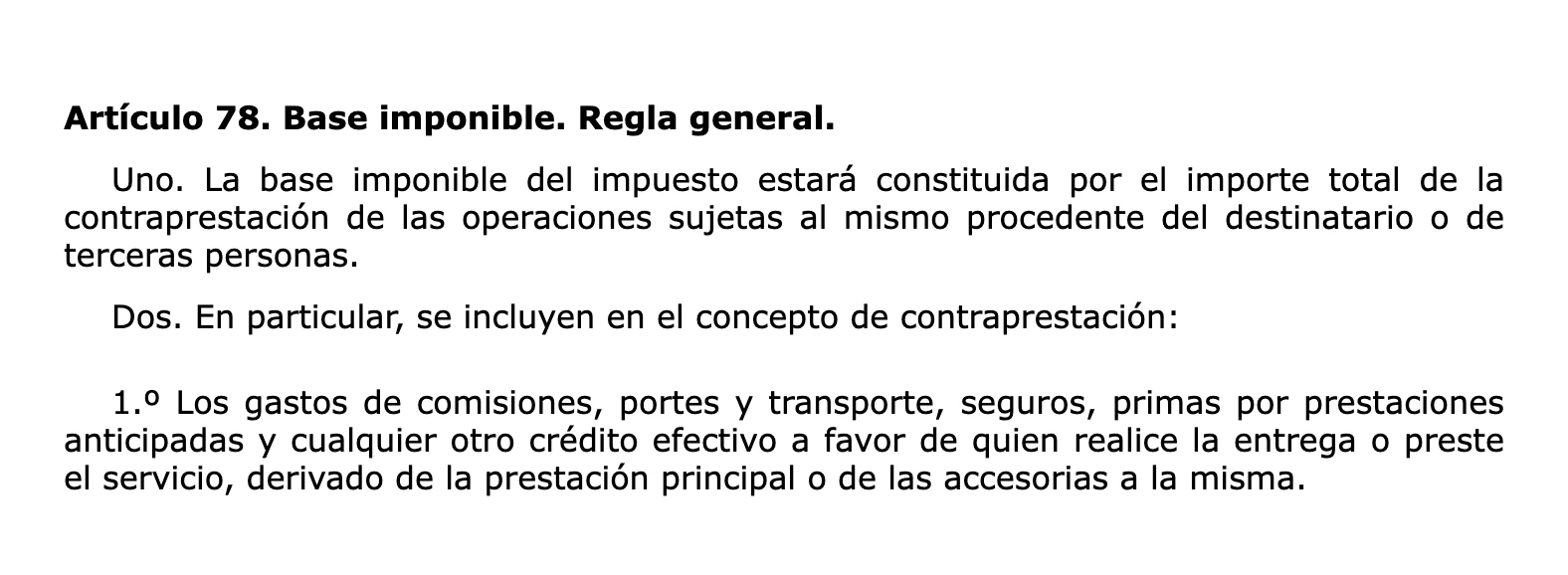
Your services carry 21% IVA, as we explain in IVA on hair, nails and beauty services. If you charge a supplement for coming to the client's home, that supplement is part of the price: the IVA base includes transport costs (article 78.Dos.1.º of the IVA Law). A €25 manicure with €5 for travel is a €30 invoice with 21% on all of it.
The invoice at the client's home
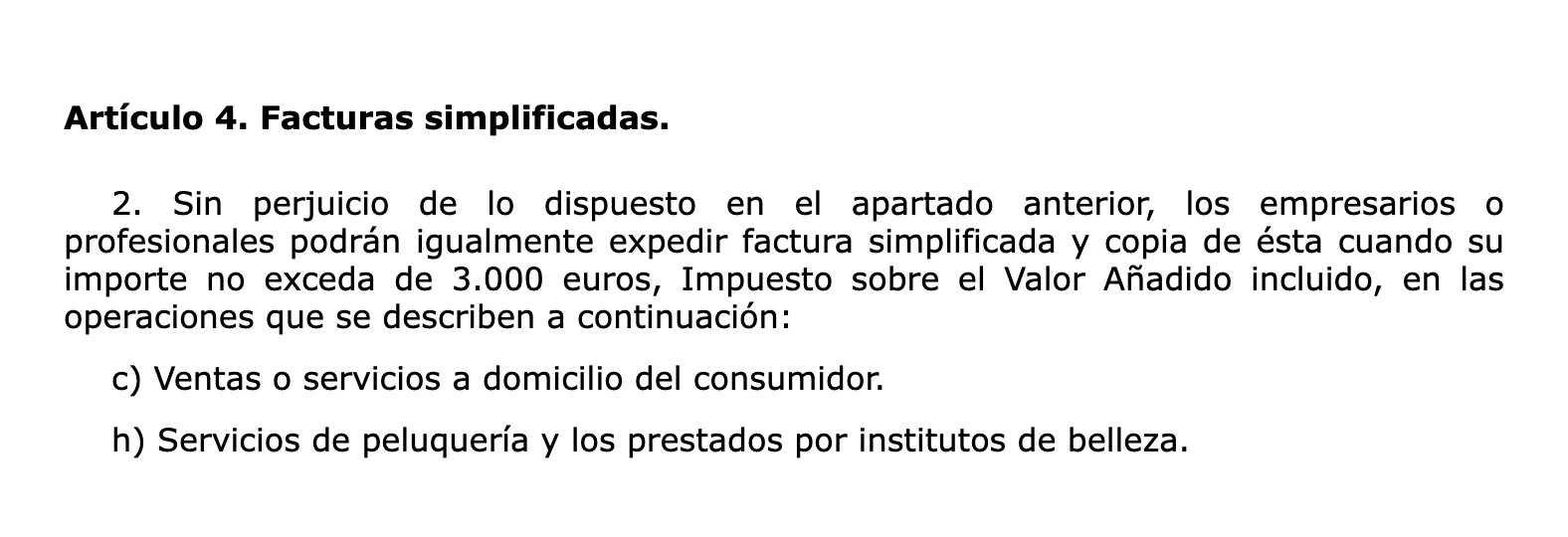
Outside módulos, every service gets an invoice. For services at the consumer's home and for hairdressing and beauty institutes you can issue a simplified invoice up to €3.000 with IVA included (article 4.2.c and h of Real Decreto 1619/2012). In practice, all your home services fit on a simplified invoice.
If clients pay you by Bizum, the invoice is the same: we explain it in getting paid by Bizum as an autónomo. And if you want to secure the appointment with a deposit, see how to take a deposit when clients book.
With Bookings your clients pick a free time on your page, get a reminder email before the appointment and pay in person, with a deposit or in full when booking.