
If you sell a €50 gift card to use in your salon, the IVA on those €50 falls due on the day you sell it, not when the person who receives it comes to use it. You invoice it that day. When the card pays for a manicure or a treatment, the service invoice deducts what you already invoiced, so the IVA is not declared twice.
Here is why, with its invoice and an example. Also what changes if another business sells the card. If you want clients to book on your own page, see Bookings for nails, lashes, brows and hair.
For Hacienda, your card is an advance payment
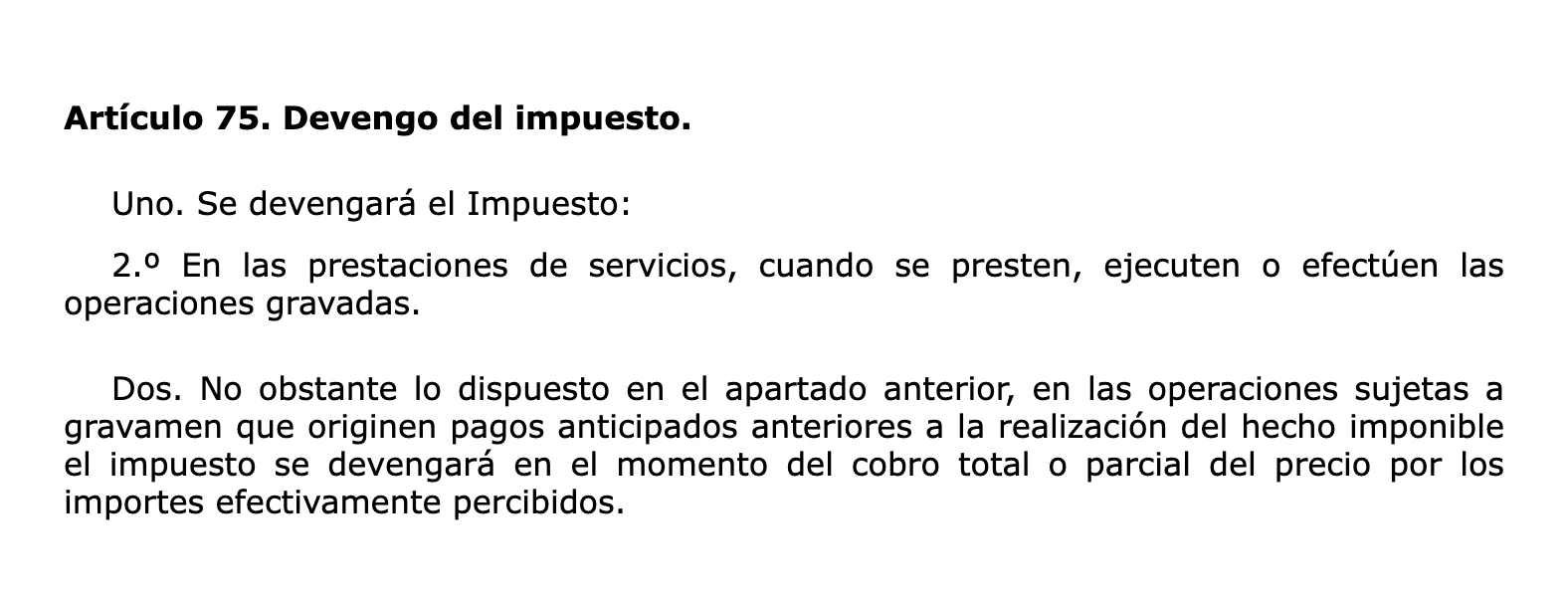
When you are paid before providing the service, IVA falls due when you are paid, on what you are paid (article 75.Dos of Ley 37/1992). A gift card for your own services is exactly that.
Spain's tax directorate (Dirección General de Tributos) said so in ruling V0560-20 of 9 March 2020, on a gift voucher a spa sold for its own massages. That voucher is the receipt for an advance payment, which is why the special voucher rules of its Resolution of 28 December 2018 do not apply to it. Its IVA goes when it is paid. The rate is that of your services: 21%, as we explain in IVA on hair, nails and beauty services.
The invoice, on the day of sale
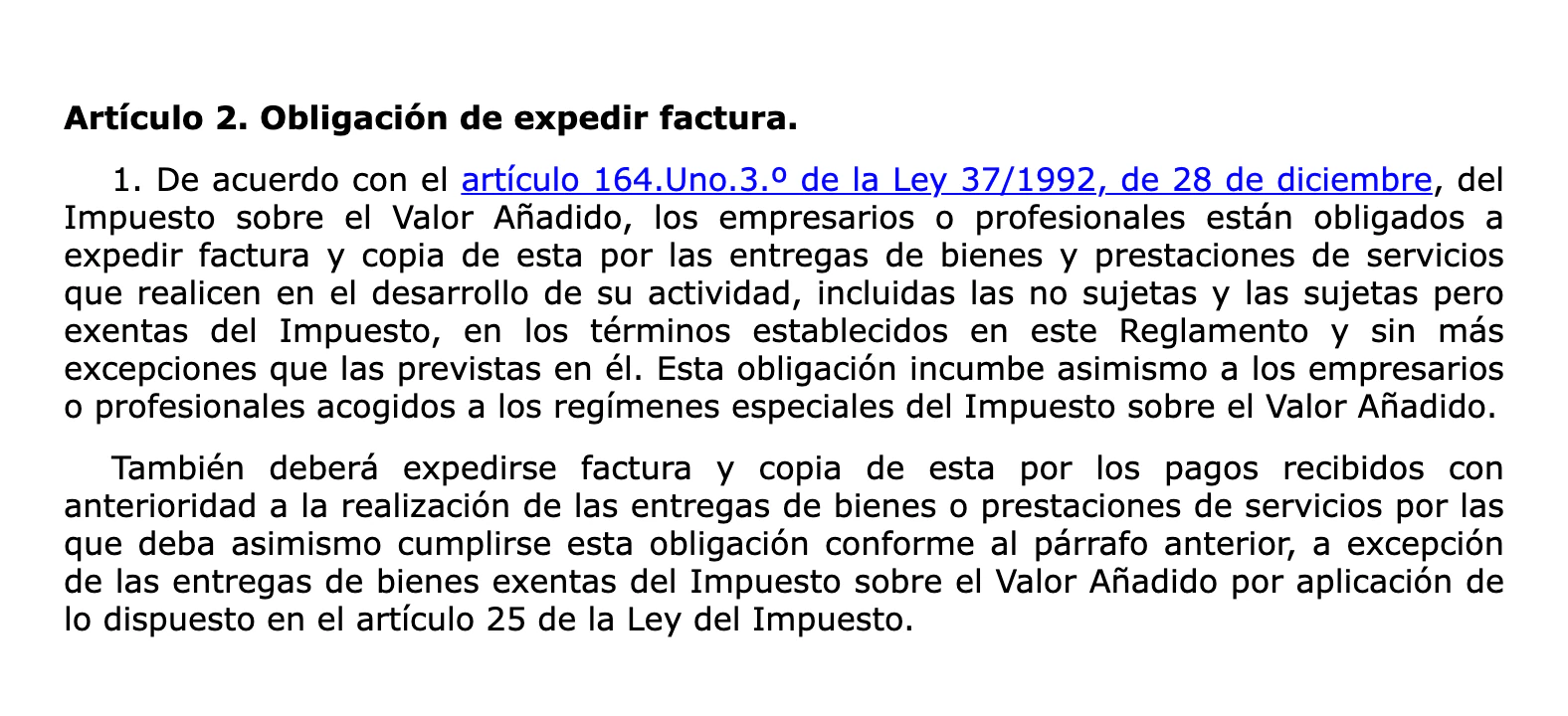
An invoice is also required for payments received before the service is provided (article 2.1 of Real Decreto 1619/2012). For a hair salon or beauty institute it can be a simplified invoice up to €3.000 (article 4.2.h).
| Gift card | Base | IVA at 21% |
|---|---|---|
| €50 | €41,32 | €8,68 |
| €100 | €82,64 | €17,36 |
When it is used: the invoice deducts the card
On the day the card is used, you issue the service invoice and deduct what you already invoiced on the card, just as with a deposit. If the €50 card pays for a €25 manicure, there is nothing left to charge and no new IVA to declare. €25 remain on the card. If the client spends more than the card covers, the difference carries its IVA on the day you are paid.
It works the same way as in how to take a deposit when clients book.
If another business sells the card
The voucher rules of the 2018 Resolution do come into play when a third party sells the card, for example an experiences website or a gift box covering several venues. The resolution sets out two kinds:
- Single-purpose voucher (bono univalente). Where the service is provided and what IVA it carries are known at issue. It is taxed when sold.
- Multi-purpose voucher (bono polivalente). The IVA it will carry cannot be known at issue. Its sale is not taxed and the IVA goes when it is redeemed, with the specific service (section Tercero).
If you work with one of those websites, each redemption comes with its own terms. Invoice according to your agreement with it.
If the card expires unused
The IVA on your own card fell due on the day of sale. No rule gives it back because the card is never used, so what you declared stays as it is.
The law sets no minimum validity for a gift card. What it does require is that the buyer knows the price and the terms beforehand (article 60 of Real Decreto Legislativo 1/2007). Put on the card or on your page what it is valid for and until when.
Bookings comes with discount codes and gift cards, alongside your booking page and your agenda.